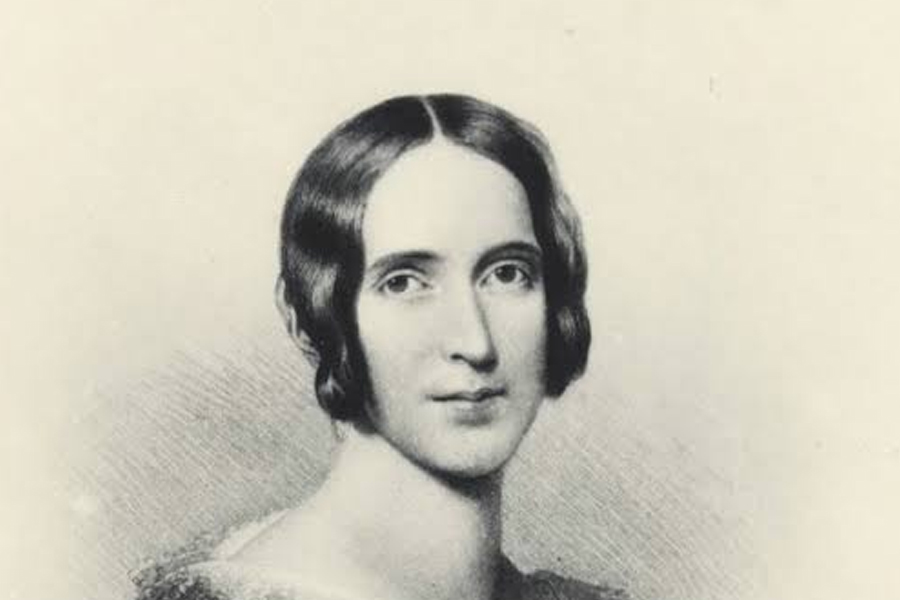
A Childhood Shaped by Mount Vernon and Woodlawn
Frances Parke Lewis Butler, known as Parke, was born on November 27, 1799, into a distinguished early American family. Her birth is recorded at Mount Vernon or Woodlawn Plantation in Fairfax County, Virginia. In either situation, strong linkages. Her father, Lawrence Lewis, was George Washington’s nephew. Martha Washington’s granddaughter and George Washington’s step-granddaughter Eleanor Parke Custis Lewis was her mother.
Parke was raised on Woodlawn, George Washington’s gift to Lawrence Lewis and Eleanor. The house was surrounded by upheaval, luxury, and slavery. Parke’s boyhood was shaped by Washington, Martha, Custis, and Lewis family stories.
The oldest daughter of Lawrence and Eleanor. Her family was exceptional in America. They were Virginia plantation elite and near enough to the founding family to preserve personal recollections, letters, objects, and traditions. Land, inheritance, and slave labour supported their prosperous lives.
Parke considered her mother, Nelly, one of her most important persons. Their correspondence shows affection and practicality. Their letters included health, travel, family marriages, domestic issues, and Woodlawn estate slaves. Letters reveal how women of the time maintained long-distance family networks.
Her Family Connections
Frances Parke Lewis was connected to many Revolutionary and colonial families. Her paternal grandparents were Fielding and Betty Washington Lewis. George Washington’s sister Betty. Parke was related to Martha Washington’s son John Parke Custis and Eleanor Calvert through her mother.
Parke was Martha Washington’s great-granddaughter and a close connection of the Washington, Custis, Lewis, and Calvert families. Her lineage was more than pride. It affected her social status, marital chances, and legacy.
Parke’s siblings were 1803-born Lorenzo Lewis and 1813-born Mary Eliza Angela Lewis Conrad. Like many nineteenth-century families, some children perished young. The survivors kept in touch through letters, visits, property, and memories of their renowned ancestors.
The Lewis household preserved the past almost as carefully as it managed the present. Names such as Washington, Custis, Lewis, and Parke carried the weight of family history. Parke inherited that legacy, but she also helped carry it into a new region of the country.
Marriage to Edward George Washington Butler
In 1826, Frances married Edward George Washington Butler. The wedding took place at Woodlawn on April 4. Butler was born in 1800 and became a United States Army officer, West Point graduate, and later a sugar planter.
Edward Butler, Revolutionary War officer, was his father. Butler’s father died, and Andrew Jackson became his guardian. He served in a developing US, which expanded westward and faced Native nations, foreign powers, and internal political struggle.
Beginning in 1825, Parke and Edward wrote during their courtship. Their correspondence covered politics, travel, health, family, and marriage expectations. Their merger united two powerful lines. Edward brought military status and the Butler family name, while Parke brought Washington and Custis.
Marriage changed the direction of Parke’s life. Instead of remaining centered in Virginia, she followed Edward through a series of moves before the couple settled in Louisiana. Her world expanded geographically, but it remained connected to her Virginia relatives through regular correspondence.
Dunboyne Plantation in Louisiana
By the early 1830s, Edward and Parke had established themselves at Dunboyne Plantation near Bayou Goula in Iberville Parish, Louisiana. A plantation house was built around 1833, and the property became the center of the family’s life.
A slave-powered sugar plantation, Dunboyne was part of an agrarian economy. Sugar production needs year-round effort. In the Butler family, slaves planted and chopped cane, maintained fields, moved goods, worked processing equipment, cared for livestock, and did domestic labour.
The Butlers also moved enslaved people from Virginia to Louisiana. This forced relocation separated families and communities while strengthening the labor system that supported the plantation. Parke’s role as plantation mistress involved managing domestic affairs, supervising household labor, arranging hospitality, and helping organize the family’s daily life. Her responsibilities were substantial, but they existed within a system of racial coercion and human ownership.
Dunboyne was more than home. A business operation, social stage, and place where the Butler family strove to turn inherited prestige into regional prosperity. The Mississippi River linked the plantation to markets, ships, and sugar estates. However, the water was dangerous. Floods, sickness, unstable markets, agricultural failures, and political changes might devastate the operation.
Children and the Next Generation
Frances and Edward had several children, although not all survived to adulthood. Their family included sons and daughters whose lives reflected the political and military divisions of the nineteenth century.
Edward George Washington Butler Jr., born in 1829, became a major in the Confederate 11th Louisiana Infantry. He died in 1861 at the Battle of Belmont during the Civil War. His death brought military conflict directly into the Butler family and left a lasting mark on Parke and Edward.
Born about 1831 or 1832, Eleanor Angela Isabella Butler married and died in Shreveport, Louisiana. Born in 1834, Caroline Swanwick Butler married William Barrow Turnbull. Born in 1836 or 1837, Confederate general Lawrence Lewis Butler married Mary Susan Gay. Another daughter, Susan G. Butler, may have been born around 1846.
Property, family names, and pressures were passed down to the offspring. They were raised on a wealthy plantation with family, servants, enslaved workers, military connections, and Virginia memories. The Civil War, an end to slavery, and the following economic downturn altered their adult lives.
War, Loss, and Financial Decline
The Civil War unsettled every part of the Butler world. Louisiana plantations faced disrupted markets, military occupation, crop losses, and destruction. Sugar production depended on enslaved labor, and emancipation overturned the economic structure on which Dunboyne had been built.
For Parke, the war was also a period of personal grief. Her son Edward Jr. died in battle, while other family members entered Confederate service. The political loyalties of the family placed them on the losing side of the conflict, and the postwar years brought financial uncertainty.
Ending slavery did not change plantation labour only. It changed relationships, law, property values, and wealth. Former slaves wanted freedom, pay, family reunification, and control. Planters used contracts and forced labour to maintain agricultural production under new conditions.
The Butler family, like many former planters, struggled to regain the prosperity of the antebellum period. Dunboyne remained part of the family story, but the world that had sustained it was gone.
Her Final Years
Parker lived in Pass Christian, Mississippi, and other locales in her final years. She lived through the Early Republic, Civil War, and Reconstruction. She saw the generation that remembered George Washington die and the plantation society that supported her adulthood collapse.
At 75, Frances Parke Lewis Butler died on June 30, 1875. She was interred in Pass Christian’s Live Oak Cemetery. Her grave links a Louisiana plantation family to the Washington heritage, but her life was more convoluted. Daughter, wife, mother, correspondent, household manager, and plantation mistress, her life was intertwined with slavery, privilege, migration, and conflict.
Frequently Asked Questions
Who was Frances Parke Lewis Butler?
Frances Parke Lewis Butler was a Virginia born woman from the Washington, Custis, and Lewis family network. She married U.S. Army officer and sugar planter Edward George Washington Butler in 1826 and later lived at Dunboyne Plantation in Louisiana.
What was Frances Butler’s connection to George Washington?
Her father, Lawrence Lewis, was George Washington’s nephew. Her mother, Eleanor Parke Custis Lewis, was Martha Washington’s granddaughter and George Washington’s step-granddaughter. Frances was therefore part of the extended Washington family and a great-granddaughter of Martha Washington.
Where did Frances Parke Lewis Butler live?
She spent her early life at Woodlawn Plantation in Fairfax County, Virginia. After her marriage, she lived in several locations before settling with her husband at Dunboyne Plantation near Bayou Goula in Iberville Parish, Louisiana. She spent part of her later life in Pass Christian, Mississippi.
What was Dunboyne Plantation?
Edward and Frances Butler owned Dunboyne, a nineteenth-century sugar estate. It had a home, agricultural grounds, processing facilities, outbuildings, and enslaved worker quarters along the Mississippi River. It operated with slave labour before freedom.
Did Frances Butler have a formal career?
She had no modern job. Her duties included household management, domestic operations, hospitality, correspondence, and plantation support. These duties were conducted inside the estate’s slavery system.
How many children did Frances and Edward Butler have?
Records differ and several children died young, but the couple had dozens. Edward George Washington Butler Jr., Eleanor Angela Isabella Butler, Caroline Swanwick Butler, and Lawrence Lewis Butler were their recognised children. Some family records list Susan G. Butler as a daughter.
What happened to the Butler family during the Civil War?
Personal and financial misfortunes plagued the family. Family relatives of Edward Butler Jr., who died in the Battle of Belmont in 1861, also fought for the Confederacy. Military campaigns, liberation, market devastation, and enslaved labour collapse disturbed Dunboyne and the Louisiana sugar business.
When and where did Frances Parke Lewis Butler die?
Frances died on June 30, 1875, in Pass Christian, Mississippi. She was 75 years old and was buried in Live Oak Cemetery.